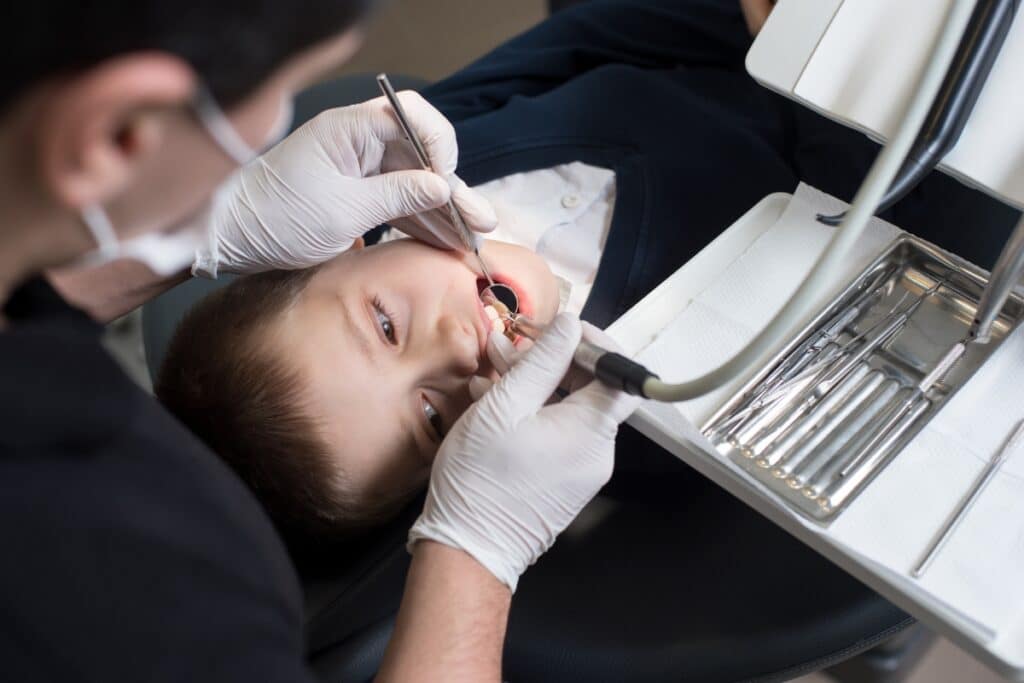
“It’s just a baby tooth. Won’t it fall out anyway?” It’s one of the most common questions we hear from parents, and it’s a fair one. Baby teeth are temporary, after all.
But some of those little teeth stick around much longer than most people realize. And when a baby tooth has a deep cavity or infection, saving it is often the healthiest choice for your child, both now and later.
Why Baby Teeth Are a Big Deal
Baby teeth do important jobs:
- Chewing and nutrition. Healthy teeth help kids eat a balanced diet without pain.
- Speech. Teeth help kids form sounds clearly as they learn to talk.
- Saving space. Each baby tooth holds a spot for the permanent tooth growing underneath.
- Confidence. Kids notice their smiles, especially once school starts.
The back baby molars often stay in place until around ages 10 to 12. That’s years of chewing, talking, and smiling. Losing one early can let nearby teeth drift into the gap, which can crowd the permanent teeth and lead to orthodontic problems later.
When Does a Baby Tooth Need a “Root Canal”?
When a cavity grows deep enough to reach the nerve inside the tooth (the pulp), it can cause pain, sensitivity, or infection. Signs may include:
- Toothache, especially at night
- Pain when eating sweets or cold foods
- A pimple-like bump on the gum near the tooth
- Swelling in the gums or face
- A tooth that has turned gray or dark
Treating the nerve can save the tooth, relieve pain, and stop infection from spreading.
What Is a Baby Root Canal?
In pediatric dentistry, “baby root canal” usually means a pulpotomy. It’s simpler than an adult root canal.
- Numbing. We make sure the tooth is completely numb, and we can add nitrous oxide for comfort.
- Removing decay. We gently remove the cavity and the damaged nerve tissue in the crown of the tooth.
- Medicating. We place a soothing medicine to protect the healthy nerve tissue in the roots.
- Restoring. We cover the tooth with a crown to seal and protect it.
If the infection goes deeper into the roots, a pulpectomy may be needed instead. In some cases, an extraction with a space maintainer is the better option. We’ll explain every option clearly.
Zirconia Crowns vs. Stainless Steel Crowns
After nerve treatment, or when a cavity is too large for a filling, a crown protects what’s left of the tooth until it falls out naturally. We offer two main types:
| Zirconia crowns | Stainless steel crowns | |
| Look | White, natural-looking | Silver |
| Strength | Very strong and durable | Very strong and durable |
| Best for | Front teeth and visible back teeth | Back molars |
| Track record | Newer, growing body of research | Decades of use in pediatric dentistry |
| Placement | Needs a dry field and a bit more tooth shaping | More forgiving to place |
Both are excellent choices. Zirconia gives the highest esthetics possible for baby teeth. Stainless steel is a time-tested workhorse. We’ll recommend the right fit based on the tooth, your child’s needs, and your preferences.
After the Appointment
Your child’s lips, cheeks, and tongue may stay numb for a couple of hours. Watch closely so they don’t bite or chew on them, which is a common cause of sores after dental visits. Stick to soft foods until the numbness wears off. Mild soreness is normal and usually eases with children’s pain relievers as directed on the label.
Preventing the Next Cavity
Treatment fixes one tooth. Prevention protects the rest. Sealants, fluoride, regular checkups, and smart snacking go a long way. Whether it’s Halloween bags or a summer of popsicles at the pool, we’ll help you build habits that keep cavities away.
Schedule a Visit
If your child has a toothache, a dark tooth, or a cavity you’re worried about, we’re here to help. Call (919) 200-0463 (ext. 1 for Holly Springs, ext. 2 for Wendell) or request an appointment online. We offer dental service plans, CareCredit, and other financing options.
Frequently Asked Questions
Does a baby root canal hurt?
No. The tooth is fully numbed first. Most children feel pressure but no pain during treatment.
Why not just pull the tooth?
Sometimes extraction is the right choice. But keeping a healthy baby tooth usually protects space for the permanent tooth and avoids the need for a space maintainer.
Will the crown fall off?
It’s uncommon. Crowns are cemented securely and are designed to stay until the baby tooth falls out on its own.
Are zirconia crowns safe?
Yes. Zirconia is a strong, biocompatible ceramic material used widely in dentistry.
Will the permanent tooth be affected?
Treating infection early helps protect the developing permanent tooth underneath.
Can my child have sedation for this treatment?
Yes, if appropriate. We offer nitrous oxide and oral conscious sedation, and we’ll talk through which option fits your child.
