If you’ve ever sat in a waiting room wondering whether your child really needs that fluoride treatment, you’re not alone. Parents in Wendell and Holly Springs ask us about fluoride all the time, and it’s a great question. You deserve clear answers about anything that goes on your child’s teeth.
Here’s what fluoride does, how silver diamine fluoride (SDF) fits in, and how we decide what’s right for your child.
What Fluoride Does for Growing Teeth
Fluoride is a naturally occurring mineral. It strengthens tooth enamel and helps repair the earliest stages of decay before they turn into cavities. Every day, the acids from bacteria and sugary foods pull minerals out of teeth. Fluoride helps put them back.
The American Academy of Pediatric Dentistry and the American Dental Association both support fluoride as a safe and effective part of cavity prevention when used in the right amounts.
In-Office Fluoride Varnish
The fluoride we use in the office is a varnish. It’s a sticky coating we paint on your child’s teeth in about a minute. It sets quickly when it touches saliva, so there’s no tray, no gagging, and no need to swallow anything.
North Carolina families may already know fluoride varnish from the pediatrician’s office. Our state’s Into the Mouths of Babes program was one of the first in the country to bring varnish into well-child visits for young children.
Most kids get varnish at their six-month checkups. Children at higher risk for cavities may benefit from more frequent applications.
Does Your Water Have Fluoride?
Many municipal water systems include fluoride at levels recommended for cavity prevention. But if your family drinks well water, which is common in the more rural parts of eastern and southern Wake County, your water may have little or no fluoride. Bottled water and some home filters can also reduce fluoride intake. Let us know what your family drinks, and we’ll factor that into your child’s plan.
What Is Silver Diamine Fluoride?
Silver diamine fluoride (SDF) is a clear liquid we can brush onto a cavity to help stop it from growing. The silver helps kill the bacteria causing the decay, and the fluoride helps harden the tooth. It takes just a minute or two, with no drilling and no shots.
The AAPD supports SDF as an option for stopping cavities in children. It can be especially helpful for:
- Very young children who aren’t ready for traditional fillings
- Kids who feel anxious about dental treatment
- Children with special health care needs
- Baby teeth that will fall out on their own fairly soon
- Buying time until a child is ready for a filling or sedation
The Trade-Off Parents Should Know
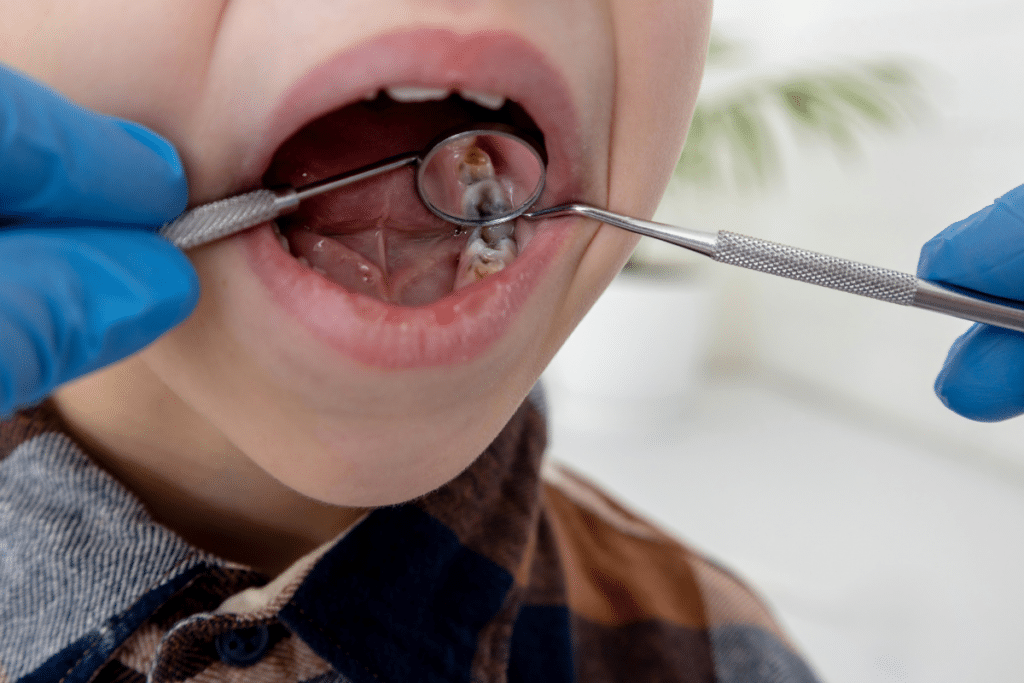
SDF has one big downside: it permanently stains the decayed part of the tooth black. Healthy tooth structure doesn’t stain, but the cavity itself will look dark. On back baby teeth, many parents don’t mind. On front teeth, some parents prefer a tooth-colored filling or crown. A filling can often be placed over SDF later.
SDF can also stain skin or clothing temporarily, and some kids notice a metallic taste for a short time. It isn’t recommended for children with a silver allergy. We’ll walk you through all of this before we use it, and we’ll show you photos so you know what to expect.
Building a Prevention Plan Together
Fluoride works best as part of a bigger picture. At every visit, we look at your child’s brushing habits, snacks and drinks, sealants, and cavity history. Then we build a plan that fits your family. Our goal is fewer cavities, fewer fillings, and more happy visits.
Schedule a Prevention Visit
Want to talk through fluoride or SDF for your child? Call (919) 200-0463 or request an appointment online.
Frequently Asked Questions
Is fluoride safe for my child?
Yes, when used in the right amounts. Fluoride varnish uses a small, controlled dose, and we tailor recommendations to your child’s age and risk.
Can my child eat after a fluoride treatment?
Yes. We usually suggest soft foods and avoiding hot or crunchy foods for a few hours, and waiting until the next morning to brush.
Does SDF replace fillings?
Sometimes it can stop a cavity on its own. Other times, we use it to buy time and place a filling or crown later.
Will the black stain from SDF go away?
No. The stain on the decayed area is permanent, though it can often be covered with a tooth-colored filling.
How many SDF treatments will my child need?
It varies. Many cavities need more than one application over time, and we monitor them at each visit.
What if I prefer to avoid fluoride?
We respect your choice and will talk through alternative preventive options, including sealants, diet changes, and closer monitoring.
