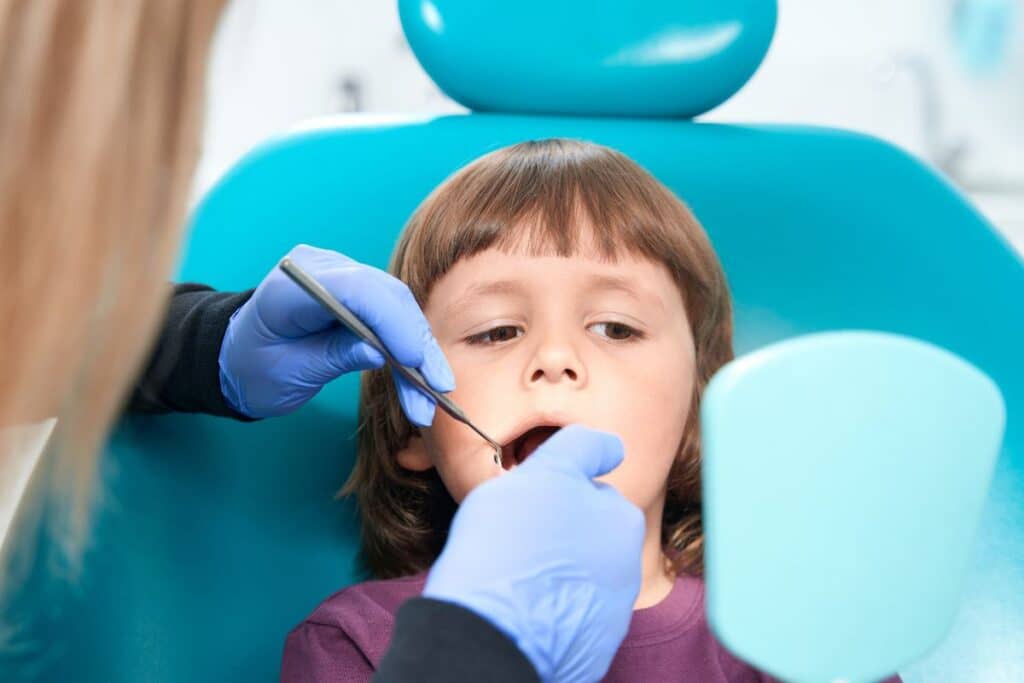
New backpack, check. New sneakers, check. Fresh pencils and a lunchbox for the first day of Wake County schools, check. But there’s one back-to-school item a lot of Wake County families forget: protecting those back teeth before the cavities start.
Dental sealants are one of the simplest, most effective tools in pediatric dentistry. They’re quick, painless, and backed by decades of research. Here’s what every parent should know.
What Are Dental Sealants?
A sealant is a thin, tooth-colored coating we paint onto the chewing surfaces of the back teeth. Those molars have deep pits and grooves, often narrower than a single toothbrush bristle. Food and bacteria settle into those grooves, and brushing alone can’t always reach them.
A sealant fills in those grooves and creates a smooth surface that’s much easier to keep clean. At The Smiling Turtle, we use BPA-free sealants, so you don’t have to worry about what’s going on your child’s teeth.
Do Sealants Really Work?
They do. According to the Centers for Disease Control and Prevention, sealants protect against 80 percent of cavities in the back teeth for two years and continue protecting against half of cavities for up to four years. The CDC also reports that school-age children without sealants have almost three times more cavities than children who have them.
That’s a lot of avoided fillings, missed school days, and tears.
When Should Kids Get Sealants?
Timing follows the arrival of permanent molars:
- First permanent molars usually come in around age 6
- Second permanent molars usually come in around age 12
We like to seal molars soon after they come in, since newly erupted teeth are most vulnerable. Some children with deep grooves in their baby molars benefit from sealants on those teeth too. We’ll let you know what makes sense at your child’s checkup.
What Happens During the Visit
Getting sealants is one of the easiest things we do. There are no needles and no drilling.
- Clean. We polish the tooth so the surface is ready.
- Prepare. A gentle solution helps the sealant bond; then we rinse and dry the tooth.
- Paint. We brush the sealant onto the grooves.
- Set. A special blue light hardens the sealant in seconds.
- Check. We make sure your child’s bite feels normal.
Most kids are done in a few minutes per tooth. Many are more interested in the blue light than anything else.
Keeping Sealants Strong
Sealants are durable, but they aren’t permanent. Chewing ice, hard candy, and sticky treats can wear them down over time. We check every sealant at your child’s six-month visits and touch them up if needed.
And remember, sealants protect the chewing surfaces only. Your child still needs to brush twice a day with fluoride toothpaste and floss between teeth.
Sealants and a Healthy Start in Wake County
We see a lot of families in the weeks before school starts and around the end of each semester. If you’re in Holly Springs, Fuquay-Varina, or Apex, our Village Walk Drive office is close by. If you’re in Wendell, Knightdale, or Zebulon, our Treelight Way office is an easy drive. Booking sealants with your child’s regular checkup saves you an extra trip.
Schedule Sealants at Your Child’s Next Checkup
Give those new molars a head start. Request an appointment online.
Frequently Asked Questions
Do sealants hurt?
No. There’s no numbing, no drilling, and no discomfort for most kids.
How long do sealants last?
Sealants can last several years. We check them at every visit and repair them when needed.
Are sealants safe?
Yes. The American Dental Association considers sealants safe and effective, and we use BPA-free materials for extra peace of mind.
Can sealants go over a cavity?
Sealants are meant for healthy teeth. If we find early decay, we’ll treat it first.
Will my child be able to eat right after?
Yes. The sealant hardens right away, so your child can eat and drink normally.
Does insurance cover sealants?
Many dental plans cover sealants on permanent molars for children. Our team can help you check your benefits.
